
SCIENTIAE: Disciplines of Knowing in the Early Modern World
Annual Conference
June 9-12, 2026
University of Nantes
Call for Papers
https://scientiae.uk
We are thrilled to announce the Call for Papers for Scientiae 2026. The annual conference, our 13th, will be held from 9 to 12 June 2026 in Nantes, France, and hosted by the Centre of research CRINI, and units of research attached to the Humanities Center at Nantes University.
Building on Scientiae’s interdisciplinary legacy, and its study of the production and circulation of knowledge, the conference will underscore the interconnectedness of regions, periods, cultures, and material and intellectual traditions in the period between 1400 and 1800. Although centred around the emergence of modern natural science, Scientiae is intended for scholars working in any area of early-modern intellectual culture.
The Scientiae network encompasses the long Renaissance period and seeks to integrate historiographical reflection into an approach that, since its creation, has been firmly rooted in epistemology and the history of science, as well as intellectual history, and the practice of knowledge in dialogue.
Our approach, therefore, is equally wide-ranging, involving Biblical exegesis, art theory, logic, and literary humanism, as well as natural philosophy, alchemy, occult practices, and trade knowledge. Attention is also given to mapping intellectual geographies through the tools of the digital humanities.
Possible themes for papers include, but are not restricted to:
- Historiography and the Construction of Early Modern Knowledge
- History of Medicine
- Diplomacy & Intellectual History
- Iberian and Portuguese Science
- Imperial and Colonial Natures
- History of Science and the Global
- Connecting Worlds
- Building Communities around Knowledge
- War and Peace on the threshold of Intellectual History
As always, we welcome proposals for individual papers, organized panels, roundtables, and workshops on all topics related to the emergent knowledge practices of the early-modern period.
Keynotes speakers
- Stéphane Van Damme (IUF, ENS Ulm, Maison Française d’Oxford)
- Martine van Ittersum (University of Dundee, Scotland, UK)
The submission deadline is 31 January 2026. The conference committee will be in touch about your submission by the end of February.
Please, send proposals with an abstract of 200 words and mini-bio of 50-100 words (no CVs) to this address: scienaenantes2026@gmail.com
Membership is not required.
Funding supports: Scientiae is offering up to 4 bursaries for Early Career Researchers (PhD candidates or scholars within max. 3 years from obtaining the PhD) to assist them with the expenses involved in attending the conference. The applicants to the bursary may simply mention it in their first submission.
Conference fees for attendance will be communicated with the submission result, by the end of February.
Languages: English. Submissions in French are allowed as an exception. Kindly note that presentations delivered in French should be accompanied by slides in English. In accordance with the network's tradition of collaborative knowledge sharing, English will serve as the main language for communication.
Organization
The conference is organized by Scientiae associaon with the collaboration of the partners at Nantes University.
Location
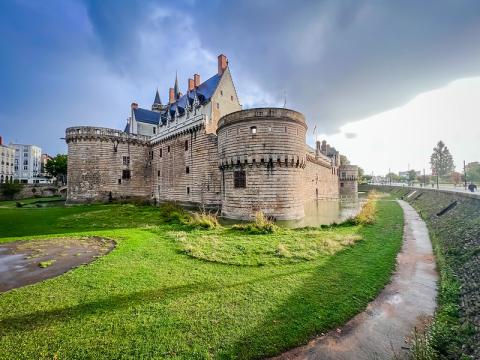
Nantes is the capital of the Pays de la Loire region and has a unique historical significance, lying at the intersection of Brittany and the Loire Valley. The distinguished history of Nantes is reflected in the Edit de Nantes, as well as the commercial significance of its port throughout the medieval era and the Renaissance. The primary activity at the port involved the importation of exotic products, such as tobacco from the West Indies and various spices from the East. At the beginning of the 18th century, the triangular trade developed in Nantes which became the first port in Europe. The city's history is reflected in its museums and architecture, which combine medieval, Renaissance, 18th-century, and modern Île de Nantes influences.
Nantes is served by a direct TGV line to Paris, ensuring efficient rail connectivity between the two cities. In addition, the international airport, located approximately twenty minutes from the city center, offers daily air services.